
IFRS 17 has reshaped how insurers and reinsurers tell their financial story, but for many organisations the standard still lives as a quarterly reporting exercise — heavy, manual, and disconnected from day-to-day underwriting.
Treating IFRS 17 as an operational layer, rather than a reporting overlay, requires a unified data foundation. Premiums, claims, and reinsurance recoveries must be reconciled at the contract level, on the cadence of the business, not the cadence of the close.
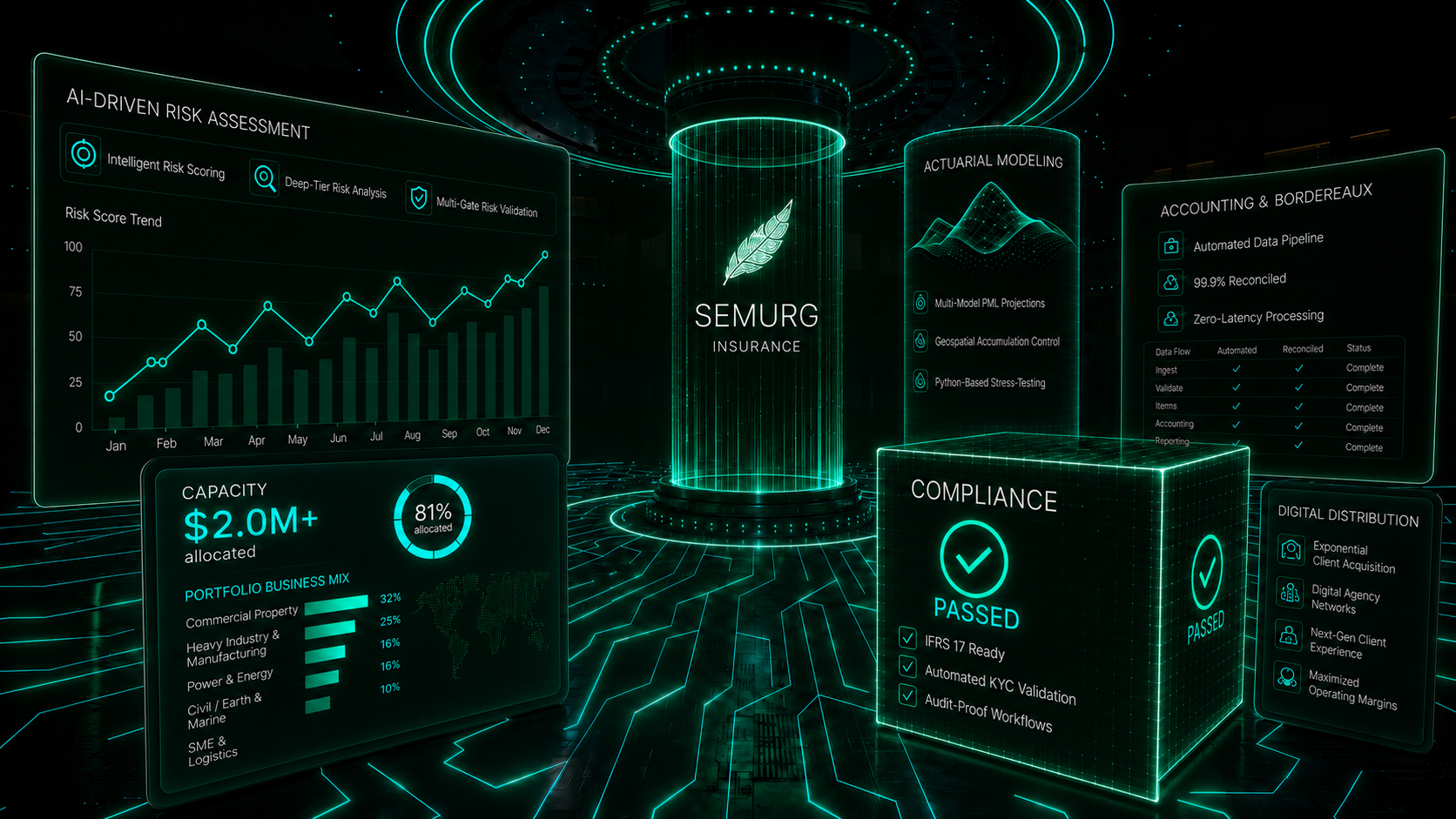
Automated bordereaux generation, a structured risk database, and controlled data lineage are the prerequisites. Once these are in place, IFRS 17 outputs become a by-product of the underlying system rather than a separate exercise.
For MGA partners and cedants, this means reporting becomes a source of insight into portfolio profitability — not just a regulatory obligation — and audit cycles shorten materially.